
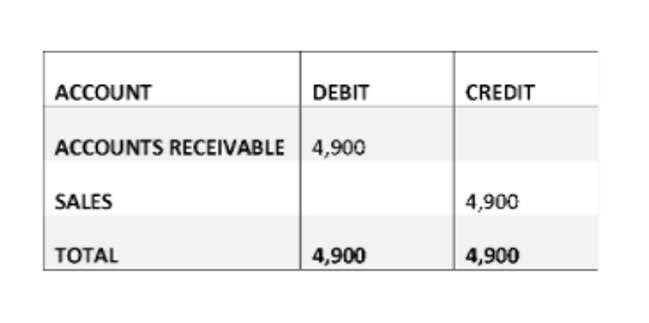
Understanding your cash flow is fundamental to the financial health of your business. Cash reconciliation provides a real-time view of your cash inflows and outflows. This clear picture of your financial health allows you to make sound decisions about investments and spending. By closely monitoring your cash position, you can ensure you have enough liquidity to cover operating expenses, meet debt obligations, and capitalize on growth opportunities. This proactive approach to cash management is crucial for maintaining a healthy financial standing and achieving long-term sustainability.
Unrecorded transactions
HighRadius leverages advanced AI to detect financial anomalies with over 95% accuracy across $10.3T in annual transactions. With 7 AI patents, 20+ use cases, FreedaGPT, and LiveCube, http://cleaningsponge.net/blog/commercial-invoice-vs-other-invoices-know-the/ it simplifies complex analysis through intuitive prompts. Backed by 2,700+ successful finance transformations and a robust partner ecosystem, HighRadius delivers rapid ROI and seamless ERP and R2R integration—powering the future of intelligent finance.
- This can be done with any bank connected to Atlar, enabling customers to reliably sync financial data between their banks and their ERP.
- You can automate workflows where possible, but don’t forget to also introduce standardized, centralized protocols that help your team accomplish routine tasks faster.
- While monthly reconciliation is a good starting point, businesses with high transaction volumes often benefit from more frequent reviews, such as weekly or even daily.
- These errors will lengthen the reconciliation procedure, requiring more time in tracking and identification.
- Regular cash reconciliation ensures your financial records are accurate and up to date.
Step 3: Compare Bank Statement to Cash Disbursements
- Learn more about how HubiFi can help you achieve seamless cash reconciliation and strengthen your financial operations by scheduling a demo or exploring our blog for further insights.
- Note that businesses who operate with significant volume, or significant amounts of physical cash, practice more frequent cash reconciliation.
- Position reconciliation is critical, especially for businesses managing investments or securities.
- The incorporation of cash flow statements provides a holistic view of the organization’s cash position, aiding in decision-making and strategic planning.
- For example, you might notice recurring discrepancies or unusual transaction activity.
- Cash reconciliation is an exercise to assist a business in sorting its accounts in terms of order and correctness to allow nitpicking smart decisions for the success of a business.
- It’s a critical internal control mechanism to prevent and detect errors and fraud.
Our tool ensures compliance with security regulations, providing robust protection for your financial information. Ensure that the solution is able to accommodate the volume of transactions that your company processes. The tool should be able to handle growing volumes of transactions as the organization grows without losing any performance or accuracy. HighRadius is designed to scale with your business, handling growing volumes of transactions without compromising performance or accuracy.
Emerging Trends: Automation in Cash Reconciliation

To make the process smoother and minimize the risk of inaccuracies, accounting software, automated reconciliation tools, and bank statements are used. This documentation is crucial for audits, helps track down discrepancies, and provides a valuable history of your financial activities. This not ledger account only helps with compliance but also provides valuable insights into your cash flow over time. Separating who handles cash from who reconciles it is a fundamental internal control. This division of labor helps prevent fraud and ensures checks and balances within your financial operations. Think of it like having two sets of eyes on your money—one handling it, the other making sure everything adds up.
The type and frequency of bank reconciliation a company needs depend on factors like transaction volume, business complexity, and regulatory requirements. By comparing your records with bank statements, suspicious activity such as unauthorized transactions, repeated errors, or other discrepancies can be detected early. Bank reconciliation is the act of comparing your bank balance to the balance in your cashbook, cash ledger, or accounting record. A cashbook is a record of your cash receipts and payments, tracking deposits and withdrawals, and is essentially a subsidiary ledger (or day book) dedicated to cash transactions.

For most subscription businesses, revenue is recognized gross of any fees incurred related to the sale (e.g. payment processor fees) and net of any taxes collected. A sample of the reconciliation portion of the daily cash reconciliation form is shown below. The Sarbanes-Oxley Act of 2002 was enacted to set standards for public companies and public accounting firms. Commonly, when there is a substantial difference, voided transactions or over-rides are the reason. With real-time insights into discrepancies, trends, and high-risk behaviors, you can quickly identify issues, take corrective action, and protect profits. Obtaining cash register reconciliation a Doctors Excuse Note is crucial for ensuring that your absence from work or school is understood and validated, particularly when health issues arise.
DA Form 4082 Daily Cashier’s Record
While these steps are straightforward in theory, manual execution can take hours—especially for organizations with high transaction volumes. Cash reconciliation automation streamlines this entire process, reducing the time from hours to minutes while minimizing human error. A cash reconciliation is the process of verifying the amount of cash in a cash register as of the close of business. The verification can also take place whenever a different clerk takes over a cash register.
This clear visibility allows you to optimize your working capital, anticipate potential shortfalls, and seize growth opportunities. A well-managed cash flow, supported by regular reconciliation, is key to sustainable business growth. Automated reconciliation systems efficiently process high transaction loads and streamline multi-entity accounting by consolidating financial reporting across multiple locations or subsidiaries.
- Set up automated alerts for unusual transactions to prevent fraud and errors.
- Regularly comparing records makes it much harder for fraudulent activities to go unnoticed.
- This lets you automatically match transactions and flag discrepancies inside your ERP, which is especially helpful for higher transaction volumes or multi-currency operations.
- This guide breaks down everything you need to know about cash reconciliation, from why it matters to how to implement a robust system, even with high transaction volumes.
- This section will explore how automation streamlines operations, improves accuracy, and what to look for in reconciliation software.
- For further insights on managing financial data, explore resources available on the HubiFi blog.
- Schedule a consultation with HubiFi to see how our automated solutions can transform your financial processes.
Close and

Some investment firms have outsourced reconciliation to external firms specialising in cash reconciliations and break resolution. This can be either specifically for reconciliation or, more broadly, for middle office operations functions where cash recon is just one of the services provided. If your Order Management System (OMS) Operates on a flush & fill model, it’s dependent on a start-of-day position and cash view from accounting.